
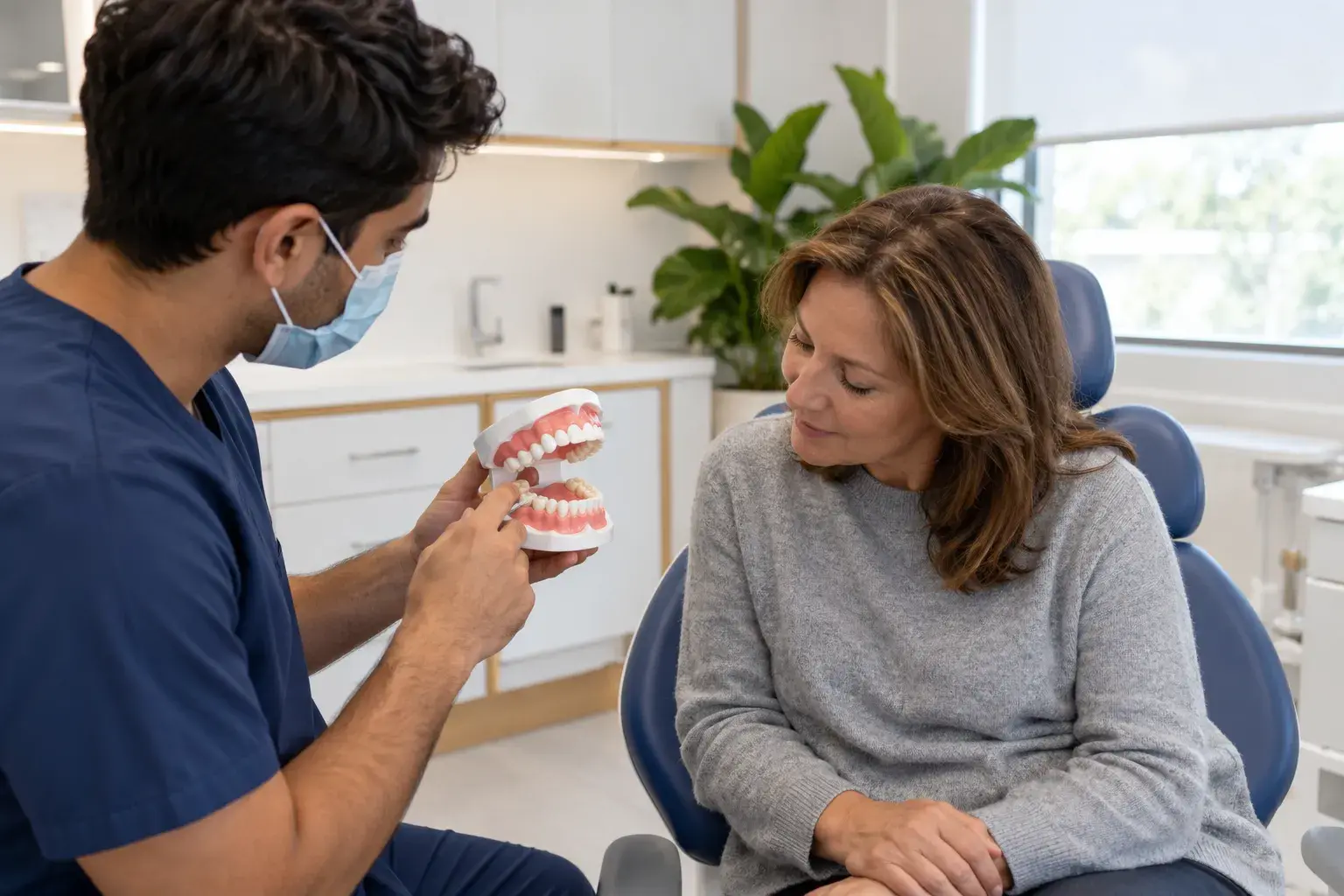
What porcelain veneers are
A porcelain veneer is a fine layer of dental ceramic, made by a dental laboratory to fit the front surface of one tooth. Once it is bonded in place with a resin cement, it becomes the visible face of that tooth.
Porcelain is hard-wearing and resists staining from food and drink, and it can be shaded and shaped to sit alongside your other teeth. Veneers are usually placed on the teeth that show when you smile, either singly or in a small group. They differ from crowns, which cover the whole tooth and need much more of it reshaped.
Concerns veneers may help with
Veneers may be worth discussing if you are unhappy with the appearance of your front teeth and simpler options are unlikely to achieve what you would like. They are not right for everyone, and they change the look of the tooth surface rather than its position or health. Veneers are not a treatment for decay, gum disease or a badly broken tooth, which need to be addressed in other ways.
- Edges that are chipped, worn or uneven
- Small gaps between front teeth
- Discolouration that whitening hasn’t shifted
- Teeth that look noticeably smaller or a different shape from their neighbours
- Mild unevenness, where orthodontic treatment isn’t preferred
Ready to book a visit?
Checking your bite, gums and grinding habits
Veneers have to cope with the forces of biting, so your assessment goes well beyond the look of your teeth. Your dentist examines how your top and bottom teeth meet, checks your gums and existing fillings, and takes x‑rays to look at the roots and supporting bone.
Grinding or clenching is one of the most common reasons veneers chip or come loose, and many people don’t know they do it. We look for flattened edges, cracks and jaw muscle tenderness. If grinding is likely, we may advise against veneers or recommend wearing a night splint to protect them. An edge‑to‑edge bite or very little remaining enamel can also make porcelain veneers less suitable.
Why preparation can’t be undone
To make room for the porcelain, a thin layer of enamel is usually removed from the front of each tooth, typically less than a millimetre. Without this, the veneer could look bulky or sit proud of the gum line. Enamel does not grow back, so once a tooth has been prepared it will always need a veneer or another covering.
Preparation is done under local anaesthetic. Sensitivity afterwards is common and usually settles. Less commonly, the nerve of a prepared tooth becomes inflamed and root canal treatment may be needed. If you want to whiten your other teeth, this is ideally done first, because a veneer’s colour can’t be changed once it is bonded.
Temporary veneers while yours are made
After preparation we take impressions and record the shade, and a dental laboratory makes your veneers, usually over a couple of weeks. In the meantime, temporary veneers may be placed to cover the prepared teeth.
Temporaries are a short-term cover, not a preview of the final result. They can feel slightly rough or thick and are held on more lightly, so it helps to avoid biting into hard or sticky food with your front teeth. If one comes off, keep it and call us so we can refit it. Your gums may also feel a little tender around the prepared teeth for a few days.
Porcelain or composite: weighing the alternatives
Composite veneers and composite bonding use the same tooth-coloured material as modern fillings, built up directly on the tooth and shaped in the chair. They often need little or no enamel removal, are usually completed in one visit and can be repaired or added to later. The trade‑off is that composite stains, chips and loses its polish more readily than porcelain, so it usually needs attention sooner.
Depending on your concern, whitening alone, orthodontic treatment with a registered specialist in orthodontics, or a crown for a heavily filled tooth may be more appropriate. Leaving your teeth as they are is always an option too, and your dentist will explain the risks and costs of each path.
Living with veneers day to day
Veneers are cleaned like natural teeth: brush twice a day with a soft brush and clean between your teeth daily, paying attention to the edge where the veneer meets the gum. The tooth underneath can still decay at that margin.
Avoid using your front teeth to bite fingernails, pens, ice or packaging, and wear a mouthguard for contact sport. Porcelain itself resists stain, but the cement line at the edge can pick up colour over time. Regular check‑ups let us spot small chips, gum changes or wear on the edges early.
Lifespan, repairs and replacement
Porcelain veneers commonly last ten years or more with good care, but that is an average, and some need attention sooner. Common reasons for replacement include a chip or crack, a veneer coming loose, decay at the edge, or gums receding to reveal the margin. Small chips can sometimes be repaired with composite, while larger damage usually means a new veneer. Replacing one involves carefully removing the old veneer and making a new one in the same way as the first.
Each replacement may involve a little more tooth preparation, which is worth weighing up if you are considering veneers at a younger age. Veneers are claimed under major dental item numbers, but some policies limit or exclude treatment done for cosmetic reasons, so check with your fund before going ahead.
Veneers, step by step
Questions about veneers
How many veneers will I need?
It depends on what you would like to change. Sometimes one veneer is enough, but matching a single veneer to the teeth beside it can be harder than treating a group. Your dentist will explain what is likely to look balanced and the trade-offs of treating more teeth.
Can I choose how white my veneers are?
Yes, the shade is discussed and agreed before your veneers are made. A very bright shade can stand out against your other teeth, so we talk about how it will sit alongside them. If you want to whiten the rest of your teeth, that is done first so the veneers can be matched to the new shade.
Can I have veneers if I grind my teeth?
Grinding raises the risk of veneers chipping or coming loose. Some people who grind can still have veneers if they wear a night splint every night, while for others composite or no treatment may be the wiser choice. We will explain the risk for your teeth before you decide.
Do veneers stain?
Porcelain itself resists staining well. The thin cement line where the veneer meets the tooth can darken slightly over time, especially with smoking or lots of coffee and red wine. Composite veneers are more prone to staining than porcelain.
What should I do if a veneer comes off?
Keep the veneer in a small container, avoid chewing on that side and call us for an appointment. If the veneer and tooth are undamaged, it can sometimes be rebonded. Otherwise a replacement may be needed.
Will my teeth feel different with veneers?
Most people notice the new surface with their tongue at first, and the edges of the teeth may feel slightly different when biting. This usually becomes familiar within a week or two. If your bite feels high or uneven, let us know so we can adjust it.
Can a chipped veneer be repaired?
A small chip can sometimes be smoothed or repaired with composite. Larger chips or cracks usually mean replacing the veneer, because porcelain can’t be added to once it is bonded in your mouth.